Gold Climbs Above $4,100 as US-Iran Fighting Pauses and Oil Crashes — The Paradox Finally Turns
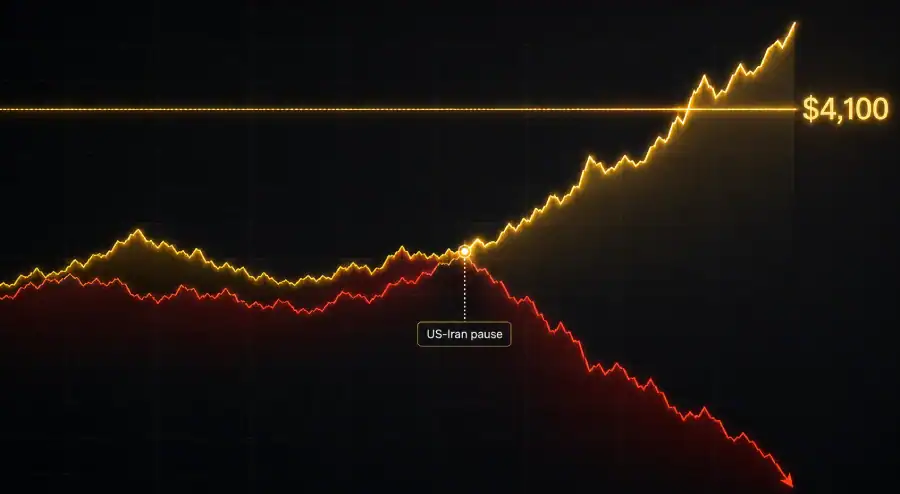
Gold has climbed back above $4,100 per ounce this Monday July 27, rising more than 1% to around $4,095, as a pause in the US-Iran conflict sent oil prices tumbling and lifted the metal ahead of this week’s pivotal Federal Reserve meeting. For the first time in this long war, the de-escalation itself is helping gold — a genuine turning point after months in which the conflict paradoxically pushed gold down. Understanding why this is happening is essential to reading the market from here.
The news over the weekend was significant. After 13 days of intense strikes, the United States suspended its attacks on Iran for a third consecutive night, in an unannounced pause that began late Friday. Iran said it will maintain a ceasefire as long as the US remains paused, and held talks with Oman over the Strait of Hormuz. Markets responded with a broad relief rally: US stock futures surged more than 500 points, and Brent crude tumbled sharply from Friday’s high near $100 toward $92 a barrel — a drop of roughly 6% to 9%.
Here is why this matters so much for gold, and why it represents a reversal of the pattern that has defined 2026. Throughout this war, escalation drove oil prices up, which stoked inflation, which pushed the Federal Reserve toward higher interest rates — and higher rates weighed on non-yielding gold. That chain meant war pushed gold down. Now the chain is working in reverse: the pause has sent oil crashing, which eases inflation fears, which relieves the pressure on the Fed — and that finally lets gold rise. The de-escalation is delivering exactly the relief gold has needed all year. Falling oil lowers the inflation threat, and a weaker dollar (the dollar index slipped 0.2%) makes gold cheaper for international buyers.
Caution is warranted, however, and it is important to be clear-eyed. Diplomats describe the lull as a tactical pause rather than a formal ceasefire. Iran-backed Houthi forces continued attacking Saudi oil infrastructure over the weekend, and the Strait of Hormuz remains effectively closed to normal tanker traffic. The situation can re-escalate quickly on a single headline. This is why a residual risk premium remains in both oil and gold.
The week’s decisive event is the Federal Reserve’s meeting, concluding Wednesday July 29. The Fed is widely expected to hold rates at 3.50% to 3.75% — roughly 66% of market participants expect no change — but there is a live hike probability of around 33% to 36%, making this a genuine binary event. Traders price about a 77% chance of a hike by September. The key will be Chair Kevin Warsh’s tone: if he pushes back against the rate hikes now embedded in market expectations, that could be quite supportive for gold.
For buyers, gold near $4,095 is about 27% below January’s record of $5,597 and up roughly 19% over the past year. The metal has been range-bound above $4,000 since late June, with buyers consistently emerging near that level. The structural floor holds firm: central banks bought a net 41 tonnes in May, and a record 45% plan to buy more this year. Today’s move shows what can happen when the war’s pressure on gold finally begins to lift.
Today’s prices: 24K — $131.50/gram | 22K — $120.55/gram | 21K — $115.10/gram
All prices USD. Monday July 27 indicative. Volatile market. Confirm in store before purchase.